8 Critical Steps to Prepare a Steep Terraced Garden
Steep slopes erode, compact, and drain poorly until you engineer them into stable, productive terraces. Learning how to prepare a slope for terraced gardening transforms unstable grade into microclimates where roots anchor deep and water infiltrates evenly. The process demands surveying contour lines, calculating cut-and-fill ratios, amending subsoil, and selecting retaining materials that balance load-bearing capacity with drainage. Each terrace becomes a discrete planting zone with adjusted pH, cation exchange capacity, and mycorrhizal colonization rates tailored to crop requirements.
Materials
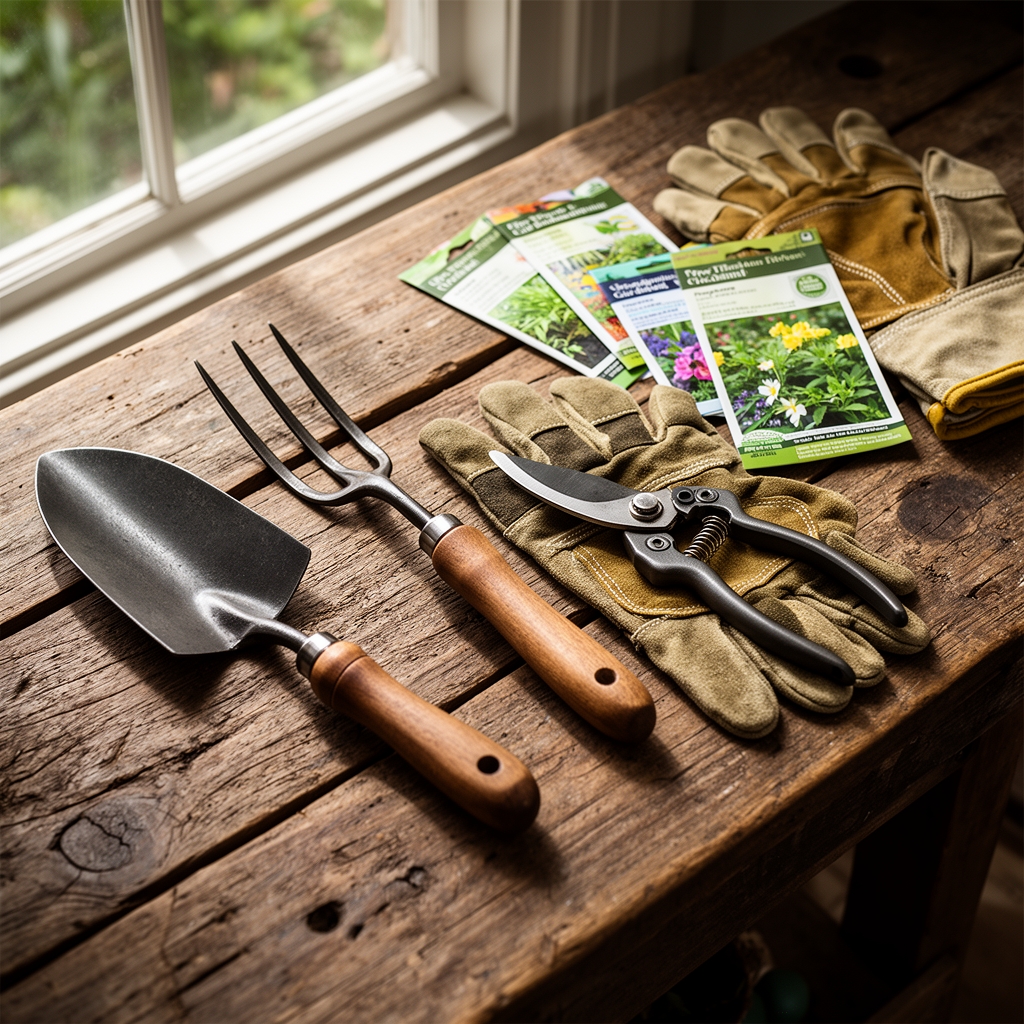
Collect landscape stakes, mason's line, a line level, and a 4-foot carpenter's level. Acquire a mattock, spade, wheelbarrow, and tamper. For retaining walls, source untreated cedar or locust logs (12-inch diameter minimum), pressure-treated 6×6 timbers, or mortarless concrete blocks rated for gravity walls. Aggregate base material should meet ASTM D2940 standards: crushed stone in 3/4-inch minus gradation compacted to 95 percent Proctor density.
Soil amendments begin with a base analysis. Target pH 6.2-6.8 for most vegetables. Apply dolomitic limestone at 50 pounds per 1,000 square feet to raise pH one full point. For sandy slopes, incorporate 4-4-4 organic meal (feather meal, bone meal, kelp) at 20 pounds per 100 square feet to boost nitrogen, phosphorus, and potassium uniformly. Add composted manure (1.5-1-1.5 NPK average) at 3 cubic yards per 500 square feet to increase organic matter to 5 percent minimum. Inoculate with endo- and ectomycorrhizal fungi spores (Rhizophagus irregularis, Pisolithus tinctorius) at label rates to accelerate nutrient uptake and soil aggregation.
Drainage pipe: 4-inch perforated PVC or corrugated HDPE wrapped in geotextile fabric (200 AOS rating). Mulch: shredded hardwood bark, 3 inches settled depth, C:N ratio 40:1.
Timing
In USDA Hardiness Zones 5-7, begin terrace construction in early September after soil moisture recharge but before freeze-thaw cycles destabilize cut faces. Zones 8-10 can work through November. Complete earthwork 6-8 weeks before the average first frost date to allow settling and initial microbial colonization.
Spring preparation resumes 4 weeks before the last frost date. Amend and inoculate beds when soil temperatures reach 50°F at 4-inch depth, measured at 8 a.m. for three consecutive days. Transplant warm-season crops (tomatoes, peppers) when night temperatures hold above 55°F and auxin distribution stabilizes under 14-hour photoperiods. Cool-season crops (brassicas, alliums) tolerate transplanting at 40°F soil temperature.
Phases

Survey and Layout: Drive stakes at grade changes. Stretch mason's line along contour using a line level to mark horizontal planes. Space terraces 3-6 feet apart vertically depending on slope angle (30-50 percent grade supports 4-foot spacing). Calculate cut depth: remove topsoil, stockpile separately, excavate subsoil to create level tread 4-6 feet wide. The riser height should not exceed 18 inches for stability.
Pro-Tip: Flag the uphill cut line 6 inches beyond your final measurement. Slopes settle 8-12 percent after tamping.
Retaining Wall Construction: Excavate a trench 6 inches deep and 12 inches wide at the riser base. Backfill with crushed stone, tamp to 95 percent density. Set first course of logs, timbers, or blocks level and plumb. Drill 1/2-inch weep holes every 24 inches, 2 inches above grade, angled downward 5 degrees. Backfill wall cavity with 8 inches of gravel. Install perforated drain pipe at the base, sloped 1/4 inch per foot toward outlet. Stack additional courses, offsetting joints by half-width, pinning with 12-inch rebar driven through pre-drilled holes.
Pro-Tip: Tilt each course backward (batter) 1 inch per foot of height. This redirects lateral earth pressure into compressive load the wall can tolerate.
Soil Reconstruction: Replace subsoil, add compost and amendments, till to 8-inch depth without inverting layers. Spread reserved topsoil, rake level, irrigate to field capacity (soil holds water but drains freely when squeezed). Wait 48 hours, then inoculate with mycorrhizal solution applied at root-zone depth.
Pro-Tip: Mix biochar (2 quarts per 100 square feet) into the root zone. Pore structure increases cation exchange capacity by 20-40 percent and stabilizes auxin distribution during transplant shock.
Troubleshooting
Symptom: Terrace slumping, wall bulge, or cracks after heavy rain.
Solution: Install additional drain tile, reduce terrace width, or add geogrid reinforcement between courses. Rebuild with 2-degree batter increase.
Symptom: Seedlings yellowing uniformly (chlorosis) 10-14 days post-transplant.
Solution: Nitrogen leaching in over-drained terraces. Side-dress with blood meal (12-0-0) at 1 pound per 50 square feet. Mulch to slow percolation.
Symptom: Wilting at midday despite moist soil.
Solution: Compaction from foot traffic or machinery. Aerate with a broadfork to 10-inch depth, avoiding root zones. Re-apply mycorrhizal inoculant.
Symptom: Erosion rills forming on terrace face between plantings.
Solution: Interplant cover crops (crimson clover, annual ryegrass) at 2-week intervals. Roots stabilize soil within 21 days.
Symptom: White mycelial mats on mulch surface.
Solution: Saprophytic fungi (non-pathogenic). Incorporate mulch lightly or top-dress with compost to accelerate decomposition.
Maintenance
Irrigate terraces with 1 inch of water per week, delivered in two 0.5-inch sessions to maximize infiltration. Install a rain gauge. Drip lines positioned 4 inches from plant stems reduce foliar disease and runoff by 60 percent compared to overhead sprinklers.
Reapply mulch annually to maintain 3-inch depth. Top-dress with compost (1/2 inch layer) each spring and fall. Test soil pH and NPK every 24 months. Adjust phosphorus only if tests show <25 ppm Mehlich-3 extractable P.
Inspect retaining walls quarterly. Tighten loose timbers, clear weep holes, backfill settled areas with gravel. Rotate crop families annually to disrupt soil-borne pathogens and balance nutrient depletion.
FAQ
How steep can I terrace without engineering?
Slopes up to 50 percent (26.5 degrees) with proper retaining walls and drainage. Steeper grades require geotechnical analysis.
Do I need landscape fabric under gravel?
Yes. Geotextile (200 AOS) separates gravel from soil, preventing silt migration that clogs drainage.
Can I terrace clay soil?
Yes. Amend with gypsum (40 pounds per 1,000 square feet) to flocculate particles, improving infiltration by 30-50 percent.
How long before terraces stabilize?
6-12 months. Plant roots and microbial exudates bind aggregates. Avoid heavy tillage during this period.
What crops suit upper vs. lower terraces?
Upper terraces: drought-tolerant crops (tomatoes, beans). Lower terraces: moisture-lovers (lettuce, celery). Adjust based on drainage observations.