8 Essential Steps to Acclimatize New Houseplants
The greenhouse bench held sixty new plants on a Tuesday morning, their leaves still glistening from commercial mist systems calibrated to 85% humidity. By Friday, twelve showed crisp leaf margins and two had dropped foliage entirely. These failures stem from ignoring the physiological shock that occurs when root systems encounter new vapor pressure deficits, light spectra, and substrate chemistry. Steps for acclimatizing new plants to your home must account for the abrupt transition from controlled production environments to domestic conditions where relative humidity may plummet to 30% and light intensity varies by 200 foot-candles between rooms. Proper acclimatization reduces transplant shock by 60-80% and establishes auxin distribution patterns that support long-term structural integrity.
Materials
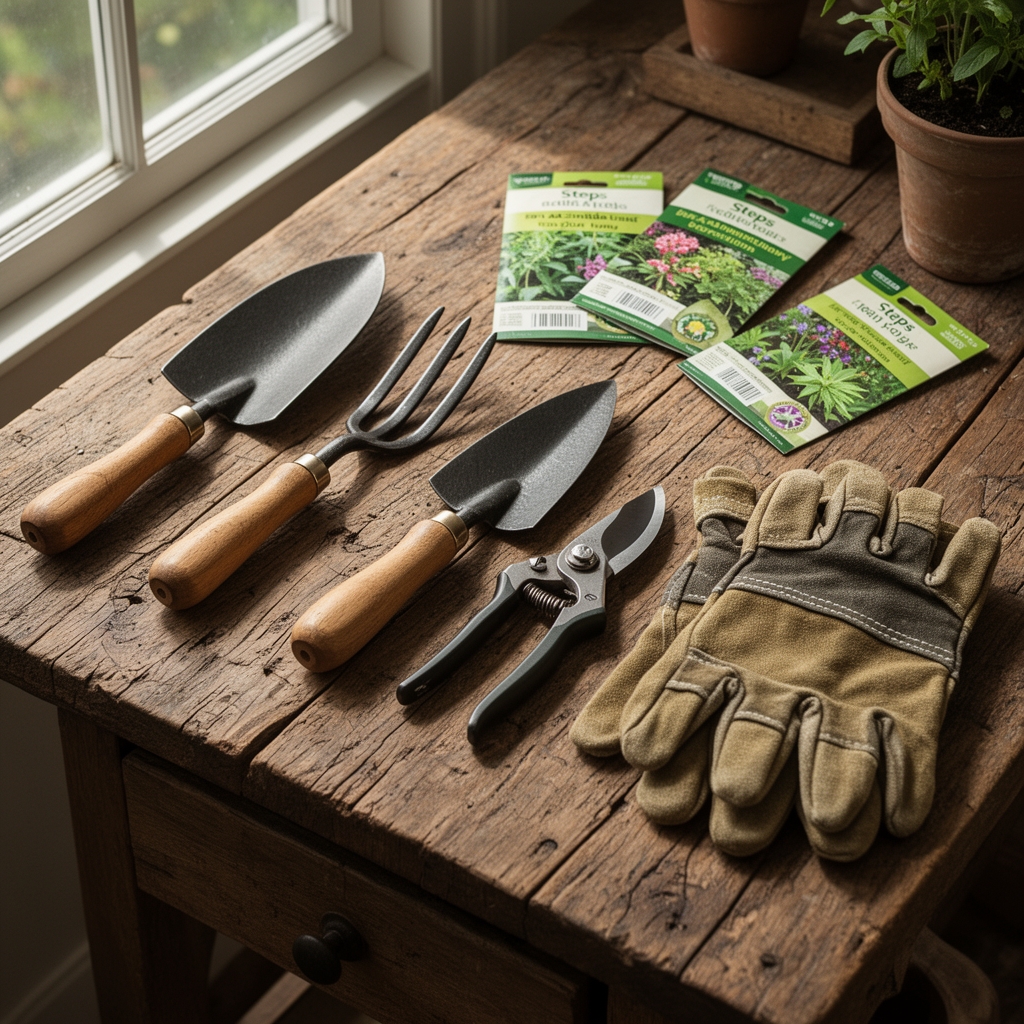
Substrate Components (pH 5.8-6.5):
- Sphagnum peat moss (pH 3.5-4.5) buffered with dolomitic lime
- Perlite (Grade 2-4mm) for 15-20% air-filled porosity
- Aged pine bark fines (1/4-inch screened)
Fertilizer Regime:
- Starter solution: 9-45-15 water-soluble blend at 100 ppm nitrogen
- Maintenance: 4-4-4 organic meal (feather, bone, kelp) applied at 1 tablespoon per 6-inch pot
- Mycorrhizal inoculant containing Glomus intraradices at 120 propagules per gram
Environmental Control:
- Hygrometer (±2% accuracy) for monitoring vapor pressure deficit
- Sheer curtain fabric (40-60% shade coefficient)
- Clay pebble trays for passive humidity increase
Monitoring Tools:
- Soil pH meter calibrated to buffer solutions 4.0 and 7.0
- Lux meter for quantifying photosynthetically active radiation
- Moisture probe reading volumetric water content at root zone depth
Timing
Acclimatization windows depend on the gap between origin and destination microclimates. Plants sourced from Florida production facilities (USDA Hardiness Zones 9-10) require 14-21 days to adapt to Zone 5-6 indoor conditions. Begin the process during stable weather periods when home heating or cooling systems maintain consistent temperature ranges of 68-74°F. Avoid acclimatization during seasonal transitions when indoor relative humidity fluctuates more than 15% daily.
Spring acquisitions (March-May) benefit from increasing photoperiods and rising ambient light levels. Fall purchases (September-November) face declining natural light and require supplemental full-spectrum LED arrays delivering 200-400 foot-candles for 12-14 hours. Winter acclimatization demands the longest adjustment periods due to furnace-dried air dropping relative humidity below 25%.
Phases

Phase 1: Quarantine and Assessment (Days 1-3)
Isolate new specimens 6-10 feet from existing collections to prevent pest transfer. Inspect leaf axils, petiole junctions, and soil surface for thrips, mealybugs, or fungus gnat larvae. Check rootball moisture by pressing substrate 1 inch below surface. The soil should feel like a wrung-out sponge with 40-60% water-filled pore space.
Measure light intensity at the intended growing location using a lux meter. Most tropical foliage requires 100-200 foot-candles, while flowering species demand 400-800. Record baseline data: leaf count, stem diameter at soil line, and any existing damage.
Pro-Tip: Apply beneficial nematodes (Steinernema feltiae) at 50 million per gallon as a soil drench to preemptively control fungus gnat populations before they establish.
Phase 2: Gradual Environmental Introduction (Days 4-10)
Position plants in their permanent location but shield them from direct sun using sheer fabric that reduces intensity by 50%. This mimics the transition from greenhouse shade cloth to open growing conditions. Monitor substrate moisture daily. Water only when the top 1 inch feels dry to touch, applying room-temperature water until 10% drains from pot base.
Increase humidity around foliage by grouping plants or placing pots on trays filled with 1 inch of expanded clay pebbles and water maintained at 0.5 inches below pot bottom. This raises local relative humidity by 10-15% through evaporative surface area.
Pro-Tip: Rotate pots 90 degrees every other day to equalize auxin distribution and prevent phototropic lean that stresses vascular tissue.
Phase 3: Fertilization and Establishment (Days 11-21)
Begin feeding with 9-45-15 starter solution at quarter-strength (25 ppm nitrogen) to stimulate root hair development without forcing foliar growth. The elevated phosphorus supports energy transfer molecules (ATP) critical for root cell division. Apply every 7 days as a soil drench, never allowing fertilizer solution to contact foliage.
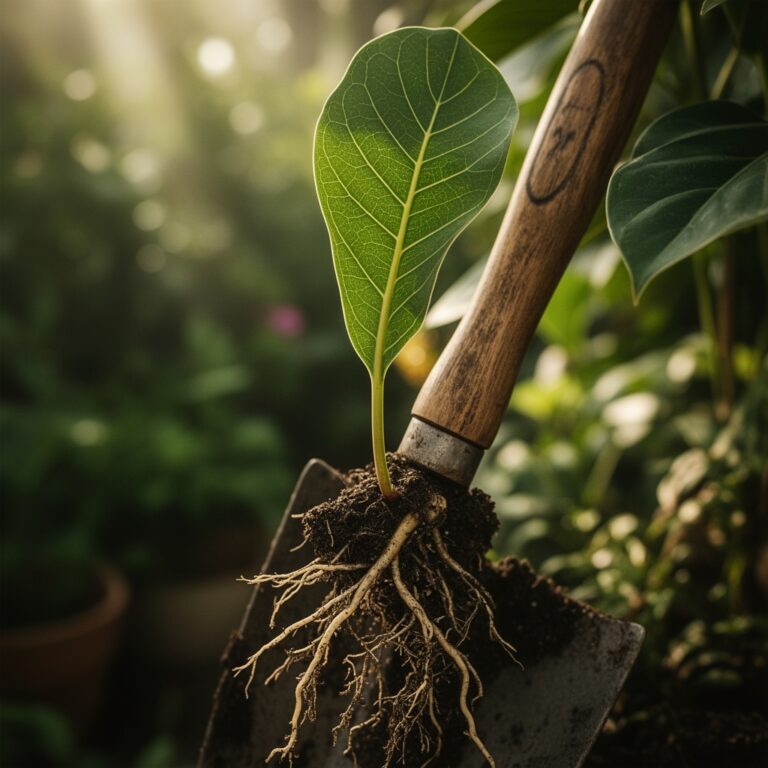
By day 14, introduce mycorrhizal fungi by mixing inoculant into the top 2 inches of substrate. These symbiotic fungi extend effective root surface area by 100-1000 times, improving water and nutrient uptake. The fungi colonize roots within 10-14 days under favorable conditions (soil temperature 65-75°F, pH 5.5-7.0).
Remove any leaves showing more than 30% necrotic tissue. Make cuts at a 45-degree angle 1/4 inch above the nearest node using sterilized pruning shears.
Pro-Tip: Spray leaf surfaces with distilled water at dawn to rehydrate cuticles without leaving mineral deposits that block stomata.
Troubleshooting
Symptom: Leaf edges brown and crispy, starting at tips and progressing inward along margins.
Solution: Vapor pressure deficit exceeds plant tolerance. Increase local humidity to 50-60% using pebble trays or room humidifier. Reduce air circulation from vents. Most tropical species evolved in environments where leaf-to-air moisture gradients remain below 2 kPa.
Symptom: Lower leaves yellow uniformly while upper foliage remains green. Petioles stay attached.
Solution: Nitrogen deficiency due to insufficient fertilization or cation exchange capacity below 8 meq/100g. Apply 4-4-4 organic fertilizer at labeled rates. Nitrogen is mobile within plants, so deficiency symptoms appear first in older tissue as the element translocates to new growth.
Symptom: New growth emerges pale yellow or white with green veining (interveinal chlorosis).
Solution: Iron deficiency induced by alkaline substrate pH above 7.0 or poor root oxygenation. Test soil pH and amend with sulfur to lower to 6.0-6.5. Improve drainage by adding 20% perlite to mix. Apply chelated iron (Fe-EDDHA) foliar spray at 0.1% concentration.
Symptom: Sudden leaf drop affecting 20-40% of foliage within 3-5 days. Leaves fall while still green.
Solution: Ethylene gas accumulation from nearby ripening fruit or environmental stress triggering abscission layer formation. Remove ethylene sources. Increase consistency in watering and temperature. Some Ficus species drop leaves when rootball temperature drops below 60°F.
Symptom: White cottony masses at leaf axils or along stems. Honeydew deposits present.
Solution: Mealybug infestation (Pseudococcidae family). Dab insects with 70% isopropyl alcohol on cotton swabs. Follow with horticultural oil spray at 2% concentration, ensuring complete coverage of all plant surfaces. Repeat every 7 days for 3 applications to target newly hatched crawlers.
Maintenance
After the 21-day acclimatization period, maintain soil moisture by watering when the top 1-2 inches of substrate dry completely. Most 6-8 inch pots require 1-1.5 cups of water per application, enough to achieve 10% leachate from drainage holes. Watering frequency varies from every 4 days in summer to every 10 days in winter depending on ambient conditions.
Fertilize every 14 days during active growth (April-September) with 4-4-4 organic blend at 1 tablespoon per 6-inch pot, increasing proportionally for larger containers. Reduce feeding frequency to monthly during dormant periods when photoperiod drops below 10 hours and growth rates decline by 70%.
Clean leaf surfaces monthly using a damp microfiber cloth to remove dust accumulation that blocks up to 50% of light transmission through cuticle layer. Prune dead or damaged tissue immediately to prevent pathogen colonization.
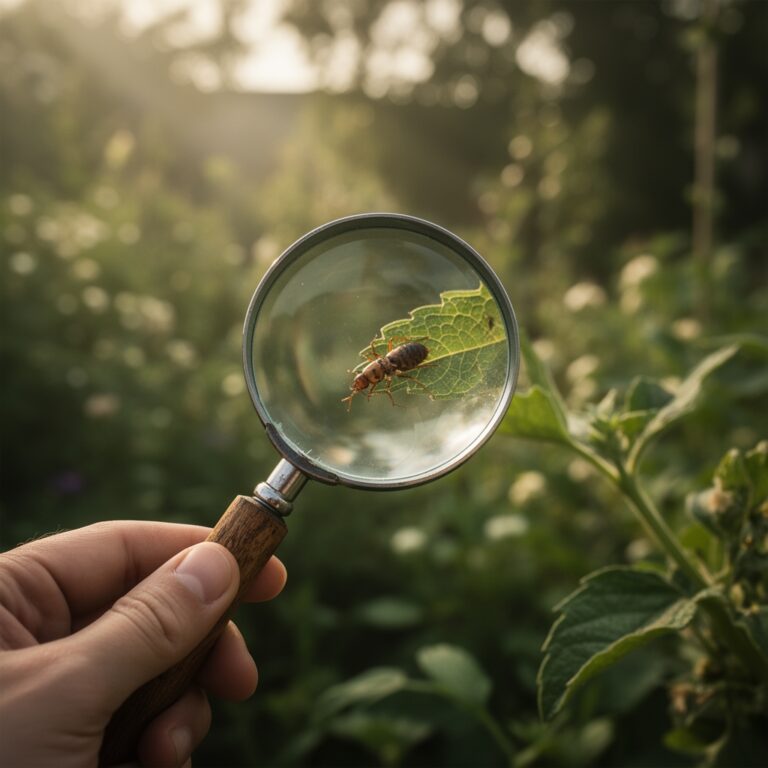
Monitor for pest populations weekly using a 10x hand lens to inspect leaf undersides and new growth. Early detection of aphids, spider mites, or scale insects allows intervention before populations reach economic threshold levels.
FAQ
How long does plant acclimatization take?
Complete acclimatization requires 14-21 days for most tropical foliage species, extending to 28 days for sensitive genera like Calathea or Fittonia that evolved in stable equatorial microclimates.
Should I repot immediately after purchase?
Wait 21 days minimum before repotting to avoid compounding transplant shock. Exceptions include severely rootbound specimens where circling roots exceed 1/4-inch diameter or decomposed substrate with pH below 5.0.
Why are leaves dropping despite regular watering?
Leaf abscission results from multiple stressors: ethylene gas, temperature fluctuations exceeding 10°F daily, rootball temperatures diverging from canopy temperatures by more than 15°F, or fungal root rot from overwatering.
Can I place new plants in direct sun?
No. Greenhouse-grown plants acclimated to filtered light require 10-14 days of gradual exposure to prevent photoinhibition and irreversible chloroplast damage. Increase light intensity by 50 foot-candles every 3 days.
What humidity level do houseplants need?
Target 40-60% relative humidity for tropical species originating in rainforest understories. Temperate-origin plants (Mediterranean herbs, succulents) tolerate 30-40%. Measure with a digital hygrometer placed at canopy height, not against walls.