7 Ways to Use a Plumb Line for Straight Edges
Learning how to use a garden plumb line for straight edges transforms haphazard garden layouts into precise, geometrically aligned growing spaces. The weighted string creates a perfect vertical or horizontal reference line that guides fence posts, raised bed frames, trellis systems, and hedge trimming with accuracy impossible to achieve by eye alone. Professional landscapers rely on this ancient tool because gravity never lies.
A plumb line consists of a pointed weight suspended from braided nylon or cotton cord. The weight hangs at true vertical regardless of terrain slope. When stretched horizontally between two fixed points at identical heights, the line becomes a level reference. This dual functionality makes it essential for establishing straight edges in garden construction and maintenance.
Materials
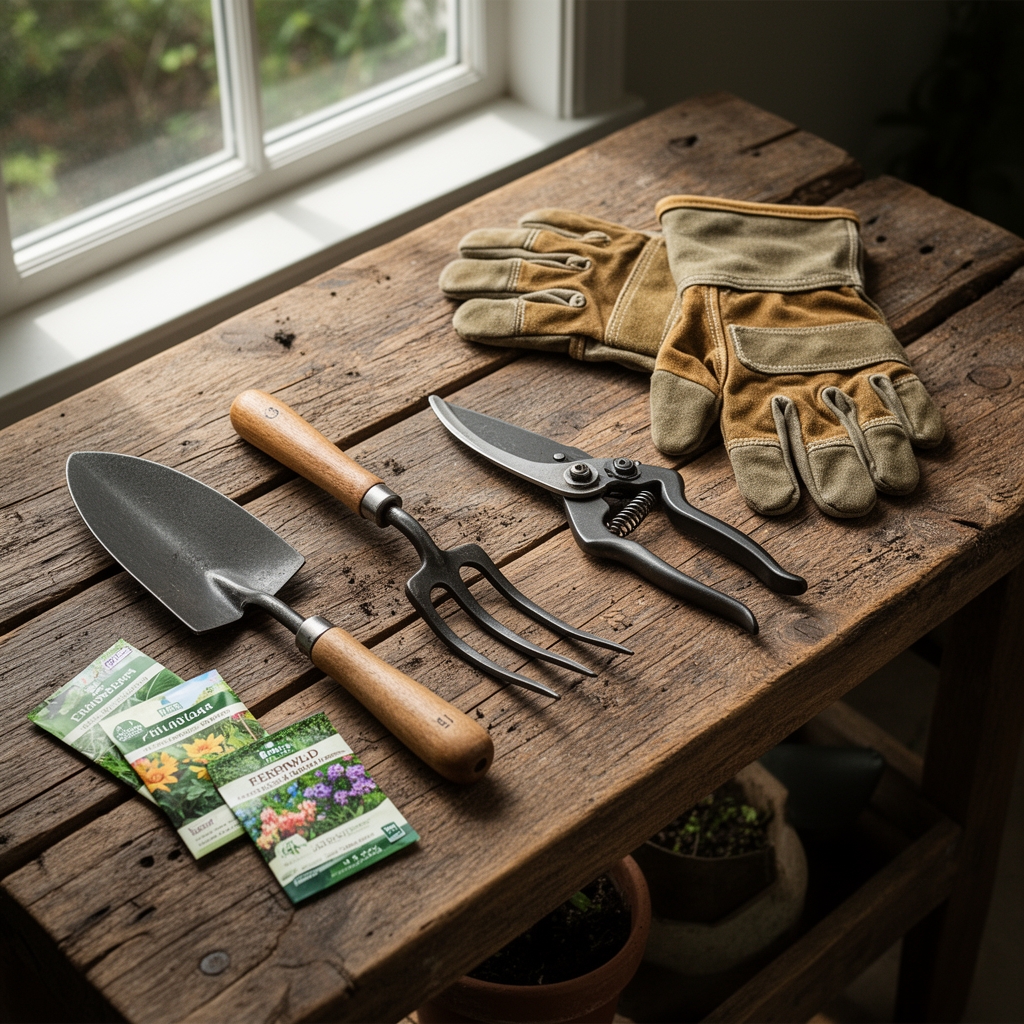
The plumb bob itself should weigh 8 to 16 ounces. Brass or steel models resist corrosion better than zinc-plated versions. The cord requires rot-resistant material. Braided nylon rated for 50-pound test withstands years of outdoor use.
For marking straight edges in soil, powdered agricultural lime (calcium carbonate) works on acidic soils below pH 6.5. Gypsum (calcium sulfate) suits neutral to alkaline conditions above pH 7.0. Both amendments supply calcium without dramatically shifting soil chemistry. Neither affects NPK ratios.
Wooden stakes need treatment against decay. Cedar or black locust heartwood lasts 15 to 20 years untreated. Pine stakes require copper naphthenate preservative, never creosote near edible plants. Metal T-posts provide permanent references for perennial borders.
Mason's line in fluorescent yellow increases visibility against soil and mulch. The 500-foot spools cost less per yard than pre-cut lengths. Store cord dry to prevent mildew on natural fiber types.
Timing
Install permanent garden structures during dormant seasons when soil moisture allows post-hole digging without compaction. Zones 3 through 5 see optimal ground conditions from late March through mid-May and September through October. The frost line depth dictates post depth: 36 inches minimum in Zone 4, 48 inches in Zone 3.
Zones 6 through 8 permit year-round installation except during waterlogged winter periods. Clay soils in these zones drain best from June through August. Sandy loam soils accept posts any month without standing water.
Plan trellis and fence alignment four weeks before transplanting dates. Tomato transplants go out at last frost plus seven days. Pole beans follow at soil temperature 60°F, typically 10 days after last frost. The structures must cure and settle before vining plants reach them.
Phases

Establishing Reference Points: Drive the first stake at one end of your intended straight edge. Measure and drive the second stake at the far end. The distance between stakes determines accuracy needs. For beds under 20 feet, allow 1/4-inch deviation. Structures over 50 feet require surveyor's-level precision.
Attach the plumb line to the first stake at your chosen height. Pull taut to the second stake. Use a line level (small bubble vial that hooks onto cord) to match heights exactly. The horizontal line now references true level. Mark this height on both stakes with permanent marker.
Pro-Tip: Spray stakes with water before driving them. Moisture lubricates soil particles and reduces friction by 40 percent. The stakes penetrate straighter with less lateral deflection.
Transferring the Line: Once reference stakes stand plumb and the connecting line sits level, you mark intermediate points. Hold a carpenter's square against the taut line. The 90-degree angle creates perpendicular branches. Mark ground positions with lime powder or landscape paint.
For curved beds with straight internal divisions, the plumb line establishes each segment independently. Flexible metal edging follows curves while internal supports maintain geometric precision where paths intersect.
Pro-Tip: Wind affects lines longer than 30 feet. Work during morning calm before thermal winds develop. In persistent breeze, wet the cord. Surface tension adds weight and reduces oscillation amplitude by 60 percent.
Post and Frame Installation: The plumb bob verifies vertical alignment as you set each post. Suspend the weighted cord from the post top. When the point centers over the bottom mark without touching the post face, vertical alignment is perfect. Backfill post holes in 4-inch lifts, tamping each layer.
Frame members attach to posts using the horizontal reference line. Clamp boards temporarily, check alignment against the stretched cord, then fasten permanently. Auxin distribution in climbing plants responds to support angles. Trellises between 75 and 85 degrees from horizontal optimize phototropic growth in pole beans and cucumbers.
Pro-Tip: Concrete footings gain 50 percent strength in 3 days, 90 percent in 7 days. Wait the full week before tensioning wire or attaching heavy frame loads. Premature stress creates microfractures that admit water and accelerate frost damage.
Troubleshooting
Symptom: Line sags in middle despite tight pull.
Solution: Cord stretches under tension. Re-tie with 10 percent less initial length. Nylon stretches 3 percent, cotton 5 percent. Pre-stretch new cord by suspending a 20-pound weight for 24 hours before use.
Symptom: Plumb bob spins and won't stabilize.
Solution: Air currents or magnetic interference affect the bob. Shield the workspace with temporary plywood panels. Keep ferrous metal tools 6 feet away. Some brass bobs contain steel cores that deflect near rebar.
Symptom: Stakes lean after installation.
Solution: Inadequate depth or loose backfill. Stake depth should equal 1/3 of exposed height plus 12 inches. Tamp backfill at cation exchange capacity field moisture (soil holds form when squeezed but doesn't glisten).
Symptom: Line position drifts during multi-hour projects.
Solution: Temperature changes expand metal stakes and shrink wooden ones. Steel T-posts grow 1/16 inch per 10 feet per 15°F increase. Re-check level every 45 minutes in direct sun.
Maintenance
Inspect plumb lines before each use. Frayed cord loses tensile strength and snaps under load. Replace cord annually if stored outdoors. Wipe metal bobs with light machine oil after use in wet soil. Moisture accelerates oxidation of brass alloy, forming green patina that eventually pits the surface.
Reference stakes in permanent beds require annual plumb checks. Frost heave displaces posts 1/4 to 3/4 inch per winter cycle in Zones 3 through 5. Verify vertical alignment each spring. Reset stakes that lean more than 2 degrees.
Mycorrhizal fungi colonization around wooden stakes peaks in year two. Avoid disturbing established posts unnecessarily. The fungal network improves soil aggregation and moisture retention within an 18-inch radius.
Store plumb bobs hanging from hooks. Resting bobs on their points flattens the tip and degrades accuracy. Wind cord in loose figure-eight pattern to prevent kinking.
FAQ
How accurate is a plumb line compared to a laser level?
A properly used plumb line achieves 1/8-inch accuracy over 20 feet. Laser levels reach 1/16-inch but cost 40 times more. For garden applications, plumb line precision exceeds requirements.
Can I make a plumb line from common materials?
Yes. A 10-ounce fishing sinker on 50-pound braided fishing line works perfectly. Total cost runs under 8 dollars. Avoid hollow weights that trap air bubbles and destabilize.
What length cord do I need?
Purchase 50 feet of cord minimum. This covers beds up to 45 feet with excess for knots and re-cutting. Longer cords tangle and require two people to manage.
Does temperature affect plumb line accuracy?
Metal components expand and contract, but gravity remains constant. The plumb line itself stays accurate. Stakes and attached structures shift with temperature, requiring periodic re-verification.
How do I mark perfectly straight hedge edges?
String the plumb line at desired hedge face height. Trim all growth extending past the line. Work from one end to the other in single pass. The human eye detects deviations as small as 1/4 inch over 10 feet, so precision matters for aesthetic results.